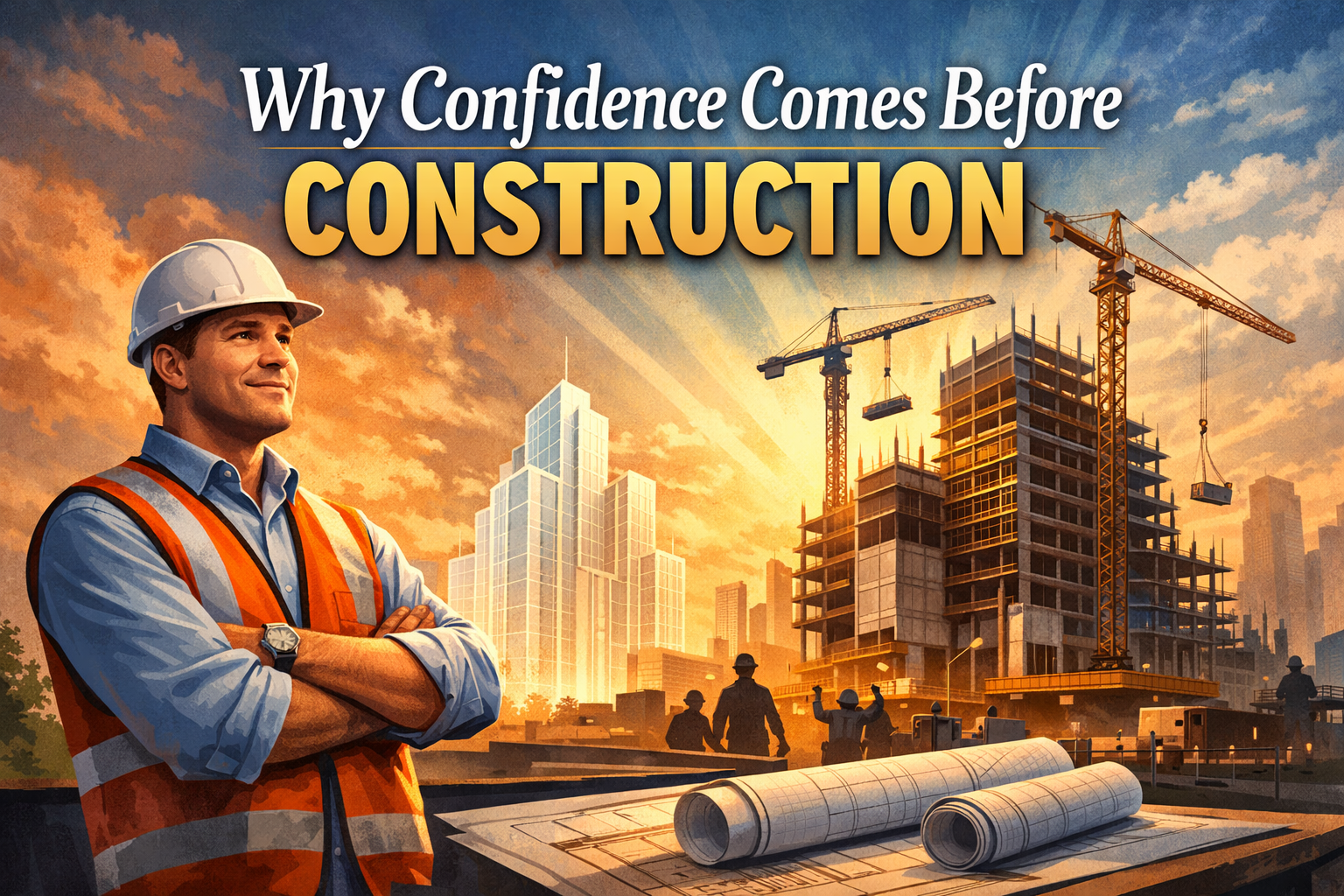
Every major project you see standing today, bridges, skyscrapers, rail systems was built twice. First in the mind, then in reality.
This is the story of the man behind the High-Speed Rail vision, Samuel Uko, who saw what did not yet exist in Africa but chose to believe in it anyway.
Long before plans were drawn or discussions began, he had already constructed the idea in his mind, clear, vivid, and undeniable.
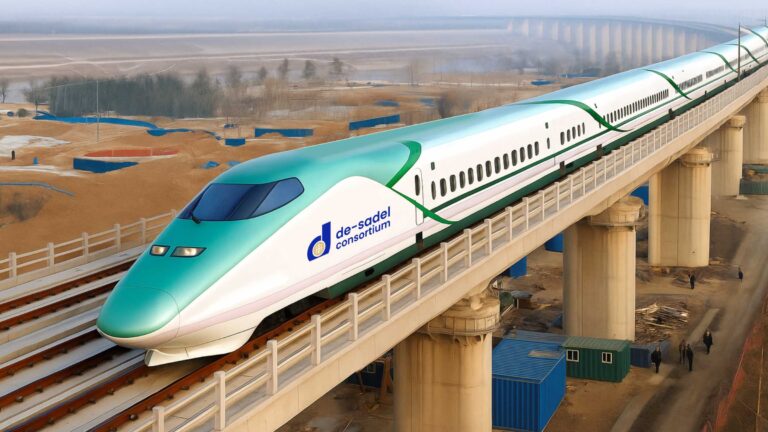
He didn’t just think about a High-Speed Rail System connecting Abuja to Lagos; he experienced it. In his dream, he saw himself seated inside the sleek bullet train, watching the landscape blur past as he traveled swiftly between cities that once felt far apart.
That vision was not a passing thought, it became a conviction. And it is this deep, unwavering belief that has fueled his confidence, turning what once seemed like a distant dream into a project steadily moving toward reality.
Before the first brick is laid or the first machine is powered on, something far more important must exist: Confidence.
Confidence is not just a soft skill or a motivational buzzword. It is the invisible infrastructure that supports every visible structure. Without it, even the most well-funded and technically sound projects struggle to begin, let alone succeed.
The Foundation of Every Great Project.
Construction is often viewed as a physical process: materials, labor, engineering, timelines. But beneath all of that lies belief: belief in the idea, belief in the outcome, and belief in the people executing it.
Confidence answers the critical early questions:
- Is this project worth pursuing?
- Can it actually work?
- Will people support it?
Without strong, collective “yes” answers, projects stall before they even break ground. Investors hesitate. Governments delay approvals. Teams lose direction.
In contrast, when confidence is present, momentum builds quickly. Decisions are made faster, risks are embraced strategically, and challenges are seen as solvable rather than fatal.
Confidence Drives Investment.
No major construction project moves forward without funding. But funding is rarely released based on technical plans alone, it is driven by trust and confidence.
Investors and stakeholders look for:
- Clear vision
- Strong leadership
- Evidence of feasibility
- Long-term value
Confidence communicates all of these. It reassures stakeholders that the project is not just possible, but profitable and sustainable.
In many cases, what unlocks millions or even billions in funding is not just data, but conviction.
Confidence Aligns People and Purpose.
Large-scale projects involve multiple players: engineers, architects, government bodies, contractors, and the public. Each group has its own concerns and priorities.
Confidence acts as a unifying force. It aligns everyone toward a shared vision and reduces friction. When leaders communicate confidently, teams become more decisive, collaboration improves, and execution becomes smoother.
Without confidence, even the most skilled teams can become fragmented, leading to delays, miscommunication, and cost overruns.
The High-Speed Rail Project: A Real-World Example.
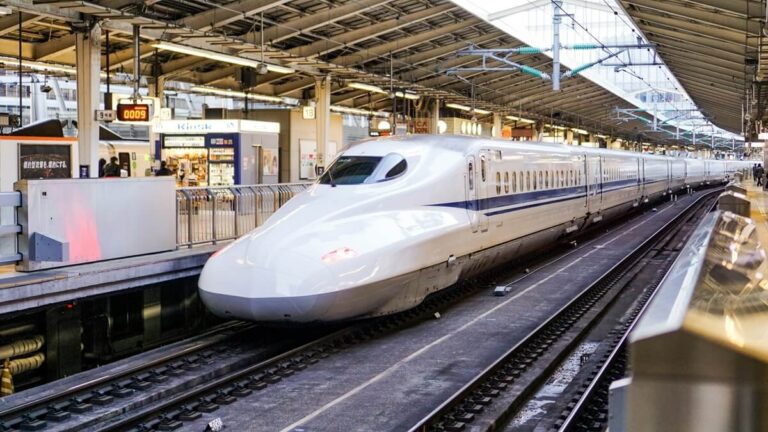
Consider the development of modern high-speed rail systems, such as Japan’s Shinkansen or China’s rapidly expanding high-speed rail network.
These projects were not easy to initiate. They required:
- Massive capital investment
- Advanced engineering innovation
- Long-term political commitment
- Public acceptance
At the early stages, there were doubts:
- Would people adopt this new mode of transportation?
- Could the technology deliver on its promise?
- Would the economic returns justify the cost?
What pushed these projects forward was confidence from governments, engineers, and investors that high-speed rail would transform mobility and economic development.
Confidence Before Construction in Action.
Before the first rail was laid for the Shinkansen, Japan had to believe in a bold idea: that trains could travel at unprecedented speeds while remaining safe, efficient, and profitable.
That belief led to:
- Heavy investment in research and development
- Policy support at the national level
- Public buy-in for a completely new travel experience
Today, the Shinkansen is not just a transportation system, it is a global benchmark for speed, safety, and reliability.
Similarly, China’s high-speed rail expansion was fueled by strong governmental confidence in infrastructure as a driver of economic growth. That confidence enabled rapid construction across thousands of kilometers, connecting cities and boosting regional economies.
The Risk of Building Without Confidence.
When construction begins without strong confidence, the risks multiply:
- Projects may be abandoned midway
- Budgets can spiral out of control
- Stakeholder trust erodes
- The final outcome may fail to meet expectations
In contrast, confidence acts as a stabilizer. It keeps projects moving even when challenges arise because challenges are inevitable in any large-scale construction effort.
Confidence as Strategic Infrastructure
If steel and concrete form the physical structure of a project, confidence forms its strategic backbone. It influences:
- Decision-making speed
- Risk tolerance
- Innovation
- Stakeholder commitment
In many ways, confidence is the first material used in construction, just not one you can see.
Final Thoughts
“Why Confidence Comes Before Construction” is more than a concept, it is a principle that determines whether ideas ever become reality.
The success of high-speed rail systems around the world proves this clearly. Before the tracks, trains, and stations, there was belief. Before the construction, there was confidence.
And in every future project, whether it’s infrastructure, business, or personal ambition, the same rule applies:
If you can build confidence first, construction becomes inevitable.