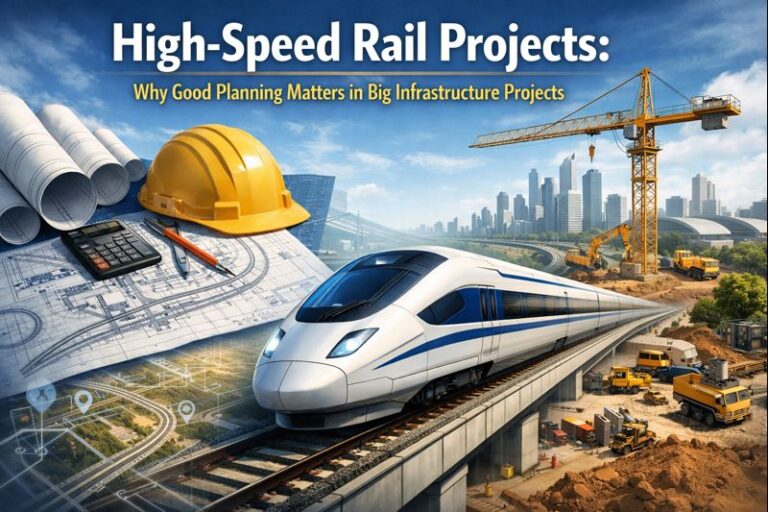
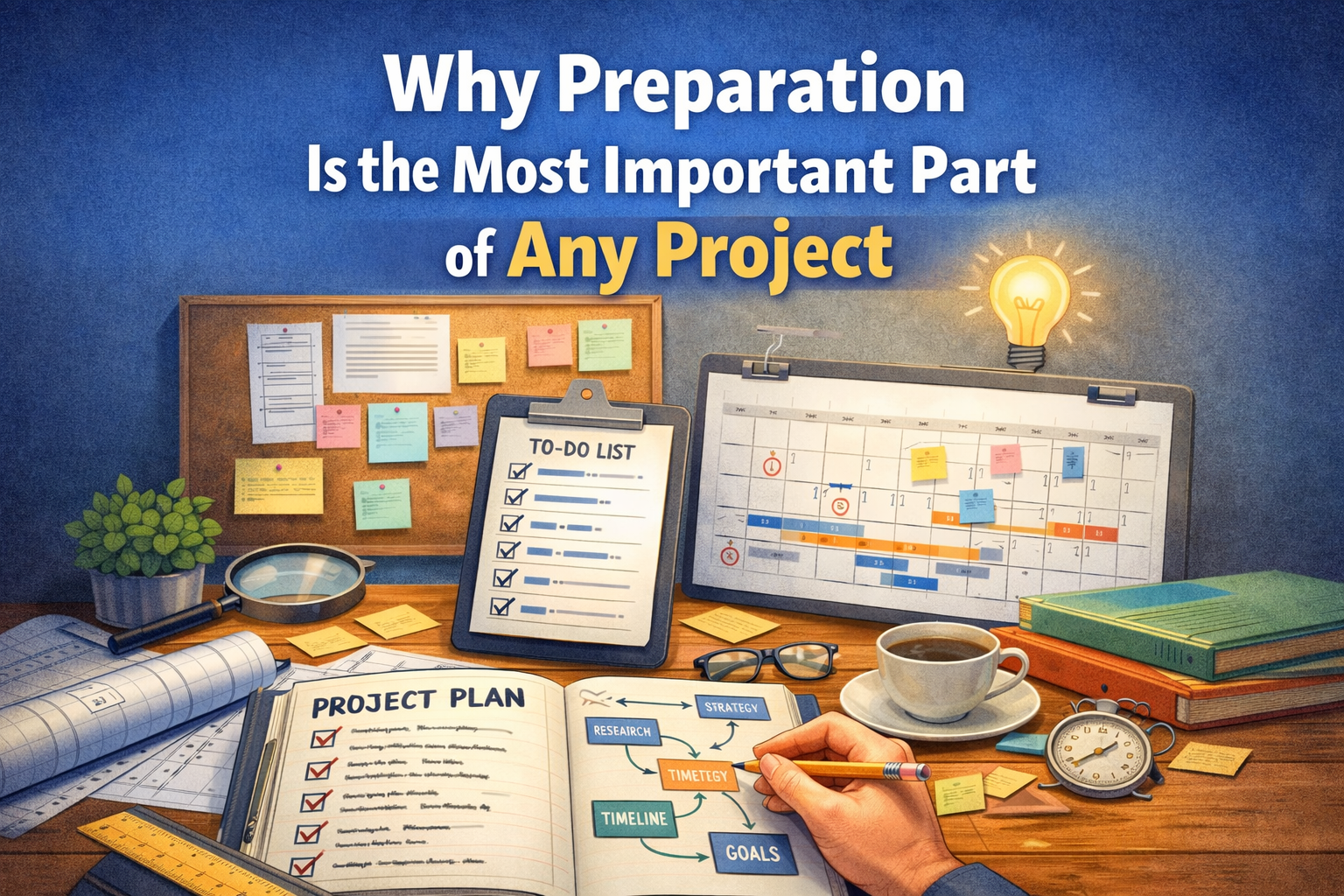
Behind every successful project is something most people never see: careful preparation. Before the first action is taken, before money is spent or construction begins, preparation quietly determines whether a project will move smoothly or fall into trouble. In simple terms, preparation is safety, control, and protection against risk.
Preparation Is About Safety and Risk Control.
Preparation means thinking ahead. It is about asking, “What could go wrong?” and putting measures in place before problems appear. When projects are rushed, risks are ignored. When projects are prepared, risks are managed.
Preparation helps teams:
- Identify possible dangers early
- Plan for challenges instead of reacting to them
- Protect people, resources, and investments
Just like wearing a seatbelt before driving, preparation does not stop movement it makes the journey safer.
Preparation Saves Time Later.
Many delays happen because things were not planned properly. Materials arrive late, decisions change mid-way, or teams realize too late that something was overlooked. These issues slow projects down.
Good preparation creates a clear path from start to finish. When everyone knows what to do, when to do it, and how to do it, work moves faster. Time spent preparing is time saved during execution.
Preparation Saves Money.
Mistakes are expensive. Fixing errors, changing plans, or stopping work halfway costs far more than doing things right from the beginning. Preparation reduces waste by ensuring that resources are used correctly the first time.
With proper planning:
- Budgets are more realistic
- Fewer unexpected costs appear
- Money is spent with purpose, not panic
In many cases, the cost of poor preparation is higher than the cost of preparation itself.
Preparation Builds Confidence and Trust.
Well-prepared projects inspire confidence. Teams feel secure, partners feel reassured, and stakeholders trust the process. Preparation shows seriousness and responsibility. It sends a clear message: this project is being handled with care.
When preparation is weak, confidence drops. People worry about delays, safety, and outcomes. Preparation removes doubt by replacing uncertainty with structure.
How De-Sadel Is Applying Thorough Preparation to High-Speed Rail in Nigeria.
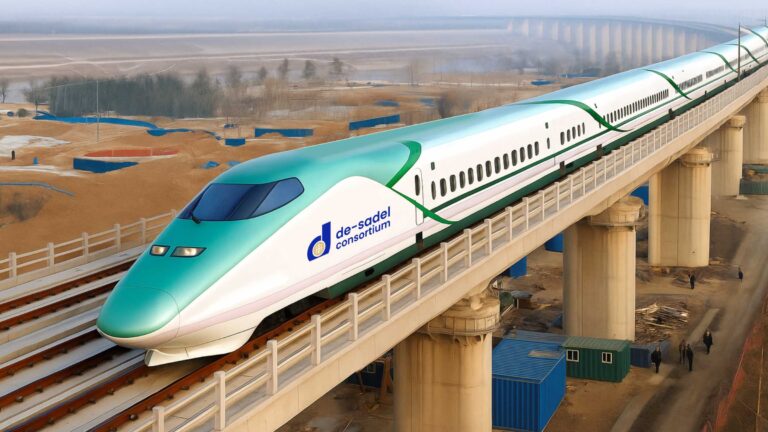
Behind every major infrastructure project that succeeds is a long period of careful work that the public rarely sees. In the case of high-speed rail development, de-sadel is investing heavily in behind-the-scenes preparation to ensure the project is not only ambitious, but realistic, safe, and durable.
Feasibility Studies: Testing the Idea Before Building It.
Before a single track is laid, de-sadel is carrying out comprehensive feasibility studies. These studies help answer the most important questions early:
- Is the project economically viable?
- Can it be sustained over the long term?
- What routes make the most sense based on population, demand, and geography?
- How can safety risks be reduced from the start?
Feasibility studies allow de-sadel to test assumptions on paper instead of through costly mistakes on the ground. This stage ensures that decisions are guided by facts, not guesswork.
Technical and Safety Assessments.
High-speed rail requires extremely high safety standards. Behind the scenes, de-sadel is reviewing international best practices, safety frameworks, and proven rail models from countries where high-speed rail has operated successfully for decades.
These assessments help ensure:
- Track designs meet safety requirements
- Train systems can operate reliably at high speeds
- Risks such as derailment, system failure, or security threats are anticipated early
By addressing these issues upfront, de-sadel reduces future operational risks and strengthens public confidence.
Stakeholder Consultations and Engagement.
Large projects affect many people. de-sadel is engaging in consultations with key stakeholders to understand concerns, expectations, and local realities. These include discussions with industry experts, partners, regulators, and community representatives.
Consultation helps:
- Align the project with national development goals
- Identify local challenges that may not appear in technical reports
- Build trust and cooperation early
When people are involved from the beginning, projects are more stable and widely accepted.
Regulatory and Institutional Alignment.
Another critical part of the behind-the-scenes work is ensuring that the project aligns with existing laws, regulations, and institutional frameworks. de-sadel is carefully navigating approvals, compliance requirements, and policy alignment to avoid future legal or administrative delays.
This step may be slow, but it prevents major disruptions later.
Financial Planning and Risk Management.
High-speed rail is a long-term investment. de-sadel is working on financial planning models that consider construction costs, operational sustainability, and long-term maintenance. Risk management strategies are also being developed to protect the project against cost overruns, funding gaps, and unforeseen challenges.
This level of preparation helps ensure the project remains financially sound over time.
Building a Robust Foundation Before Execution.
All these activities, feasibility studies, safety assessments, consultations, regulatory planning, and financial modeling serve one purpose: to build a robust foundation before visible construction begins.
Rather than rushing to show progress, de-sadel is focusing on doing the work that prevents failure. This approach reflects a clear understanding that strong infrastructure is built first on preparation, not speed.
Conclusion.
The real strength of de-sadel’s high-speed rail vision lies in the work happening quietly behind the scenes. By prioritizing feasibility, consultation, safety, and risk control, de-sadel is laying the groundwork for a transport system that is not only modern, but dependable.
In infrastructure, what people don’t see is often what matters most and de-sadel’s careful preparation is a signal of long-term thinking and responsible development.